2018年英语一 大作文
题目图画
题目要求
Write an essay of 160-200 words based on the picture below. In your essay, you should 1) describe the picture briefly, 2) interpret the meaning, and 3) give your comments. You should write neatly on the ANSWER SHEET.(20 points)
参考范文
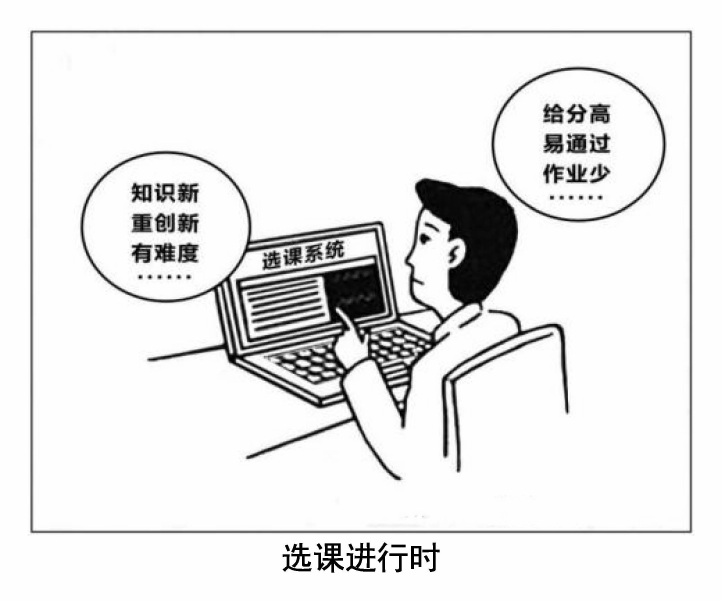
As is vividly depicted in the drawing, a student sits before a computer whose screen displays a course-selection
system. Pointing his finger at the screen, he is caught between two voices: the left bubble praises courses that
are innovative, cutting-edge yet demanding, while the right one favours those offering high marks, easy passes
and little homework.
Simple as it seems, the picture conveys a thought-provoking message about how many college students make
choices today. Rather than asking what a course can truly teach them, they weigh only how effortlessly they
can earn a good grade. This utilitarian mindset, if left unchecked, gradually turns learning from a pursuit of
knowledge into a hunt for the easiest reward, hollowing out the very purpose of higher education.
In my view, we should firmly resist such short-sighted temptation. A challenging course may cost more time
and effort, but it is precisely difficulty that sharpens our thinking and prepares us for real problems ahead.
Therefore, both students and universities ought to value genuine growth over comfortable grades, so that
education can once again nourish minds rather than merely decorate transcripts.
参考译文
正如漫画生动描绘的那样,一名学生坐在电脑前,屏幕上显示着选课系统。他用手指指着屏幕,被两种声 音拉扯着:左边的对话框推崇那些知识新颖、注重创新却有难度的课程,右边的则青睐给分高、容易通 过、作业又少的课程。 画面虽然简单,却传递出一个发人深省的信息,折射出如今许多大学生是怎样做选择的。他们不去问一门 课究竟能教会自己什么,而只掂量能多轻松地拿到好分数。这种功利心态若不加遏制,会渐渐把学习从对 知识的追求变成对最省力回报的追逐,掏空高等教育本来的意义。 在我看来,我们应当坚决抵制这种短视的诱惑。一门有难度的课或许要花更多时间和精力,但恰恰是难度 磨砺了我们的思维,让我们为将来真正的问题做好准备。因此,学生和高校都应当把真实的成长看得比舒 适的高分更重,好让教育重新滋养心智,而不只是装点成绩单。
逐段解析
【第 1 段】描述段落实客观描述。开头 As is vividly depicted 客观入题,随后 he is caught between
two voices 把左右对话框的对立摆出来,全段只描述不评论,正是第一段要承担的功能,也用上了『客
观描述入题』与『呈现画面冲突』两个句架。
【第 2 段】释义段升华为社会现象。用 Simple as it seems, the picture conveys a thought-
provoking message 由画转意,再以 Rather than asking what a course can truly teach them 点出功
利心态,把具体画面升华成一种普遍现象,完成寓意引申。
【第 3 段】评论段表态并呼吁。In my view, we should firmly resist 旗帜鲜明表态,precisely
difficulty that sharpens our thinking 给出理由,末句 both students and universities ought to
value genuine growth 以呼吁收尾,回扣第二段寓意。
A N A L Y S I S · 审题与立意
这道题到底要写什么、立意是什么
动笔前先钉死本题的核心写作任务与读者语域、读懂配图 ,再定中心立意与要展开的要
点 —— 这些是本题特有的内容判断,不是通用套路。
核心任务
评图画谈功利选课
一句话钉死:这是一篇图画评论议论文,describe the picture briefly、interpret the meaning、
give your comments三件事必须按序做全——先客观描述那幅选课漫画,再点出它讽刺的功利
求学心态,最后表明你自己的态度。任务对象是画面本身,不是给谁写信。
读者 · 语域
面向阅卷人的正式书面语
本题是大作文、没有具体收信人,虽然 give your comments要你亮出个人看法,但通篇仍须用
面向阅卷人的正式书面语,避免口语缩写与网络用语。开头用一句 As is depicted 之类的客观
句式入题即可,不需要称呼、问候和署名——加了反而不合图画作文的体例。
配图要读出
选课两难:真本事 vs 好拿分
画面主体是 一位男士坐在办公桌前,面前摆放着一台电脑,屏幕显示 选课系统,男士左手食
指指向屏幕,正在犹豫点哪门课。真正的可写点是两个对话框的对立:左侧 知识新、重创新、
有难度代表能学到真本事却费力的课,右侧 给分高、易通过、作业少代表轻松拿高分的水课
——这一对立就是全文寓意的唯一来源。
中心立意
求学应重真知而非轻松高分
中心论点:无论选课还是求学,都应看重能否学到真才实学,而不是只图给分高、轻松过关。
这正是漫画要我们在 interpret the meaning与 give your comments环节读出并表明的态度。
要展开的要点
1. 描述要点:学生在选课系统前两难
第一个写作要点是客观描述画面——一名学生用 选课系统选课,被两种声音拉扯:一边要 知识
新、重创新、有难度的硬课,一边要 给分高、易通过、作业少的水课。
2. 寓意要点:功利选课弃真知
第二个要点是引申寓意——这幅画折射当下不少大学生的功利心态:衡量一门课先看好不好
过、给分高不高,而非能学到什么,久而久之把求学异化成了『刷绩点』。
3. 评论要点:应重成长而非高分
第三个要点是表态评论——应抵制这种短视,指出难度恰恰锤炼思维、更能应对真实问题,呼
吁学生与高校都把真实成长置于轻松高分之上。
S T R U C T U R E · 谋篇与逐段
怎么分段、每段写什么、能套哪些句架
按写作家族给出现成的段落框架(每段承担什么功能),并为每段配可直接套用的 功能
句架(留出填本题内容的空位)。段序与上方参考范文一一对应。
第 1 段
客观描述画面
用一到两句话交代画面主体与左右对话框的对立,只描述、不评论,对应 describe the
picture briefly。
第 2 段
引申画面寓意
把选课这一具体场景上升为一种社会现象,点明漫画所讽刺的功利求学心态,对应
interpret the meaning。
第 3 段
表态评论收束
亮出个人态度并给出理由或做法,呼应第二段寓意、有力收尾,对应 give your
comments。
第 1 段
学生面对选课系统被两种声音拉扯
本段内容落点:一名学生坐在 选课系统前,男士左手食指指向屏幕,左侧声音要 知识新、重
创新、有难度,右侧声音要 给分高、易通过、作业少,两难跃然纸上。
客观描述入题
· As is vividly depicted in the drawing, __(画面主体在做什么).
呈现画面冲突
· He is caught between two voices: one __, while the other __.
第 2 段
折射功利求学、弃真知的心态
本段内容落点:漫画折射出不少大学生选课先问好不好过、给分高不高,而非能学到什么,
把 知识新、重创新、有难度的硬课让位给 给分高、易通过、作业少的水课,求学由此异化为
刷分。
由画面转入寓意
· Simple as it seems, the picture conveys a thought-provoking message
about __.
点明现象实质
· Rather than asking __, many people care only about __.
第 3 段
抵制短视,重成长而非高分
本段内容落点:反对只图轻松高分的短视,指出难度锤炼思维、更能应对真实问题,呼吁学
生与高校都把真实成长置于 给分高、易通过、作业少式的舒适之上。
旗帜鲜明表态
· In my view, we should firmly __ such __.
让步后给理由
· A __ choice may cost more effort, but it is precisely __ that __.
呼吁式收尾
· Therefore, both __ and __ ought to value __ over __.
R E V I E W · 自检避坑
本题在四个评分维度怎样算达标、容易在哪丢分
按阅卷四维(内容切题 / 结构连贯 / 语言准确 / 字数格式)给出本题达标要点,并把最容
易踩的低分写法摆出来 + 给改法 —— 这是写作版的「狠拆诱人错项」。
内容切题
三任务齐全且各成一段
本题最容易漏掉『释义』或把描述与评论混写在一起。确保 describe the picture
briefly、interpret the meaning、give your comments三段分明、各司其职,就守住
了内容分。
结构连贯
三段对齐三任务并有过渡
本题描述—寓意—评论逐段推进,段首用 Rather than、In my view、Therefore 等衔
接,避免三段各说各话、缺少逻辑链条。
语言准确
描述用现在时慎用高级句
本题描述部分统一用现在时(sits、points、is caught);想用 as is depicted、
conveys 等描述性句式时,务必确认搭配正确,别为炫技反而写错。
字数格式
描述短、二三段足、词数达标
本题硬性要求 160-200 words,且描述段写太长会挤占释义与评论;保持三段均衡、
字数卡在区间内,是拿分的底线。
典型低分写法 · 反面示例与改法
通篇只描述画面
反面示例:全文反复写 The man sits before a computer and points at the screen, and there are
two boxes beside him,直到结尾也没点出讽刺什么。修正:描述一句带过,第二段立刻写 the
picture reveals many students' utilitarian attitude toward study。
寓意与画面无关
反面示例:第二段大谈 We should love our motherland and study hard,与选课画面毫无关系。修
正:紧扣两个对话框,写 the contrast between the two bubbles mirrors how students weigh
grades over real knowledge。
逐字直译搭配错
反面示例:Students only want to select the easy pass and high give-score class.(give-score 为生
造,语法也乱)。修正:Students tend to choose courses that are easy to pass and generous with
marks。
空洞套话开头
反面示例:With the rapid development of society, more and more people pay attention to this
phenomenon.(不着边际、与图无关)。修正:直接 As is vividly depicted in the drawing, a
student hesitates before a course-selection system。